Fruit Flies
What attracts fruit flies, and how do they get into your home?
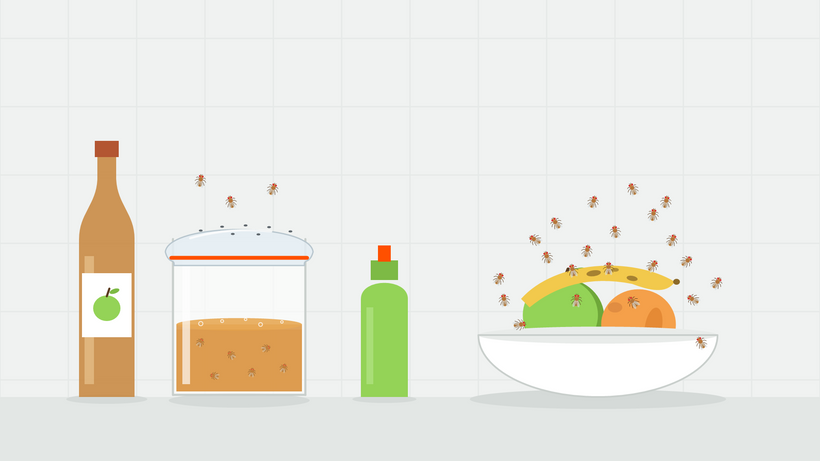
Fruit flies do not come from the fruit itself. The eggs often come home on fruit from the shop and hatch as soon as the fruit ripens, and the flies follow the smell of fermentation: ripe fruit, the last drop of wine or juice, the food waste caddy and a dirty drain. Remove those sources and a fruit fly has no reason to be in your kitchen.

In this article
How do fruit flies get into the house?
As eggs. A female lays her eggs on the skin of ripe or fermenting fruit, and they are often already there when you bring the fruit home. They are about half a millimetre long and barely visible to the naked eye. When the fruit ripens they hatch, and from egg to new fruit fly takes about 8 to 11 days at room temperature, and longer in a cool kitchen. That is why they seem to appear out of nowhere.
What attracts fruit flies when there is no fruit?
Then the source is somewhere else, in a spot that ferments or stays damp. Check the food waste caddy and the compost bin, empty bottles and cans, the kitchen sink drain, wet dishcloths and the mop bucket, damp coffee grounds and old vase water. Start looking where you see the most flies.
Can fruit flies lay eggs in unblemished fruit?
The common fruit fly does not lay eggs in unblemished fruit: she lays her eggs on ripe, damaged or fermenting fruit. The spotted wing drosophila can. She lays eggs in fruit that is still ripening on the plant, especially soft fruit such as cherries, raspberries and blueberries. So even with perfect fruit from the shop, larvae can come into the house.
Are fruit flies attracted to fruit or to yeast?
Yeast. Laboratory research shows that baker's yeast alone is enough: fruit flies come to it, lay eggs on it and the larvae grow on it. Fresh juice without yeast attracted far fewer flies. Yeasts live on ripe fruit and turn sugar into alcohol and acetic acid, and fruit flies smell that scent. That is why bananas, peaches, grapes and apples with a soft spot are favourites. And that is why a wet dishcloth, a drop of beer or rising dough also attract them.
What attracts fruit flies in the kitchen?
- The fruit bowl, especially fruit with brown patches or damaged skin.
- The food waste caddy and compost bin: waste that has stood for a few days ferments fast.
- Empty bottles and cans: a last drop of wine, beer, juice or fizzy drink is enough.
- The sink drain: they can lay eggs in the damp film of food residue.
- Wet dishcloths, sponges and the mop bucket.
- Coffee grounds, wilted flowers and dough or sourdough left to rise.
How do you get rid of fruit flies in the sink or drain?
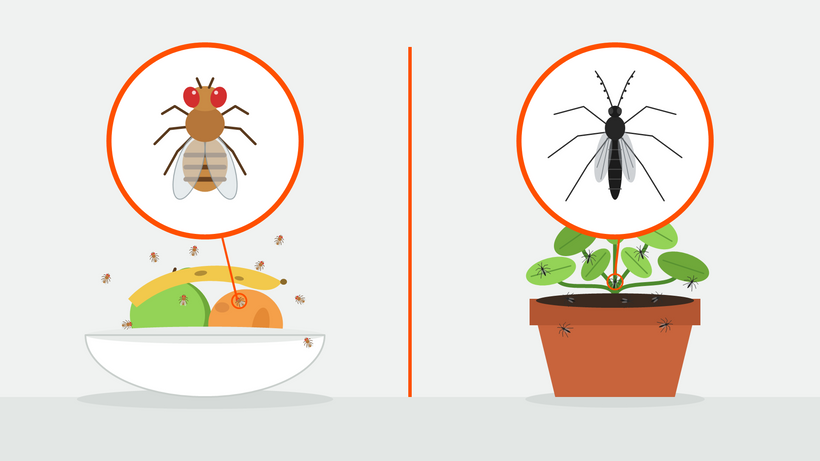
You get rid of fruit flies in the sink or drain by removing the damp film of food residue. Take out the strainer, scrub the plughole clean and flush it with hot water. Do this a few days in a row and put a fruit fly trap next to the sink. A drain can hold fruit flies as well as drain flies; the tape test shows which. How that works is explained in small black flies in the house.
Do coffee grounds attract fruit flies?
Fresh coffee grounds hardly do, but grounds that sit damp for a few days in the filter, a coffee pod or the food caddy do. They start to ferment, and that smell draws fruit flies in. If the grounds have already gone mouldy, they attract fewer: the earthy smell of mould tends to keep them away. House flies are attracted to fermenting waste like this too. So throw coffee grounds away straight after use or let them dry first. You often hear that the smell of coffee keeps flies away, but there is no good evidence for it.
Are fruit flies attracted to flowers?
Hardly to fresh flowers. To wilted flowers and old vase water, yes: the stems start to rot and the water begins to ferment. Change the vase water every few days, trim the stems and throw out faded flowers in time. If there is a fruit bowl next to the vase, the fruit is often the real source rather than the flowers.
What causes lots of fruit flies in the house?
A source that stays put, and warmth. A female lays 400 to 900 eggs, and at 25 °C it takes only about 9 days from egg to fly. That is why you see them mostly from May to September. How fast that goes and how to tackle them is in our guide how to get rid of fruit flies.
How do you make your kitchen less attractive to fruit flies?
Keep ripe fruit in the fridge, because fruit flies do not lay eggs there. Close the food caddy properly and empty it more often in warm weather. Rinse bottles before putting them aside, flush the drain regularly with hot water and let sponges and cloths dry.
| Source of yeast | Where in your home | What to do |
|---|---|---|
| Ripe fruit and fruit with brown patches or damaged skin | fruit bowl | keep ripe fruit in the fridge, because fruit flies do not lay eggs there |
| Waste that has stood for a few days | food waste caddy and compost bin | close it properly and empty it more often in warm weather |
| A last drop of wine, beer, juice or fizzy drink | empty bottles and cans | rinse them before putting them aside |
| Damp film of food residue | kitchen sink drain | take out the strainer, scrub the plughole clean and flush it with hot water |
| Wet dishcloths and sponges | sink | let them dry |
| Coffee grounds left damp for a few days | filter, coffee pod and food caddy | throw them away straight after use or let them dry first |
| Wilted flowers and old vase water | vase | change the water every few days, trim the stems and throw out faded flowers |
What do you do once the fruit flies are there?
Remove the source first, otherwise new flies keep hatching. Then put out a trap that mimics the smell of fermentation. The Super Ninja Fruit Fly Trap uses a specially developed lure based on vinegar and apple juice concentrate. In lab testing commissioned by Super Ninja for the authorisation dossier under the European Biocidal Products Regulation, the trap caught 84.9% of fruit flies within 24 hours, with competing food in the same room (SAGEA, report 4540.SAG, 2021). See the fruit fly traps, or read how to make a homemade fruit fly trap.
Want to know more? Our guide how to get rid of fruit flies explains how fast fruit flies multiply, how long they live and where they lay their eggs.
Sources. Yeast and fruit: Becher et al., Functional Ecology (2012). Mould scent: Becher et al., Journal of Chemical Ecology (2010). Spotted wing drosophila: Helsen, van Bruchem and Potting, Gewasbescherming (2013), Wageningen University & Research. Number of eggs and development: the Dutch Knowledge and Advice Centre for Animal Pests (KAD) and Bloomington Drosophila Stock Center.
Authorisation number Super Ninja Fruit Fly Trap: GB-2026-1354-002 (Northern Ireland: NI-2026-1354-002). Use biocides safely. Always read the label and product information before use.