
Mosquito repellent spray for your skin
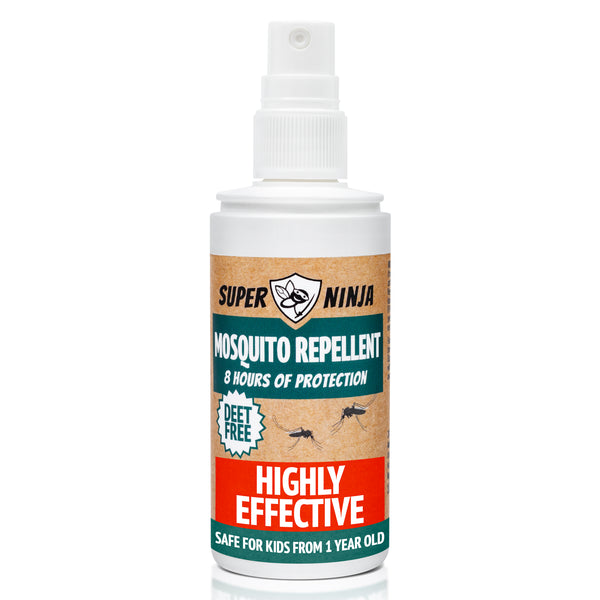
A mosquito repellent for your skin protects you against mosquito bites wherever you apply it: on an evening in the garden, on a bike ride, while camping or on a walk. Our insect repellent spray contains 20% IR3535, is also for use against ticks and can be used from age 1.
1 product
What you need
What does a mosquito repellent do, and what does it not do?
A mosquito repellent protects your skin against mosquito bites, but it does not get rid of mosquitoes or make your room mosquito free. You apply it to the skin that stays uncovered; the mosquitoes flying around simply stay where they are. If you want fewer mosquitoes in and around the house, get rid of standing water and use a fly screen or a mosquito net: our guide how to avoid mosquito bites explains how.
How long does a mosquito repellent protect you?
A mosquito repellent protects you for as long as the label of that product says, because protection time differs per active substance and per product. For our spray, the label tells you to reapply after swimming or heavy sweating, and how many times a day you can use it for each age group.
How do you apply mosquito repellent properly?
Spray it onto exposed skin and spread it evenly with your hand, shortly before you go outside. Mosquitoes bite most at dusk, so apply it before sunset, not once you are already being bitten.
- Spray only onto exposed parts of the body, not under clothing.
- For your face, spray into your palm first and spread it, keeping it away from the eyes.
- Wash your hands before touching food.
- Avoid contact with synthetic fabrics, and note that the spray is flammable.
Can you use mosquito repellent on children?
Our spray can be used from 1 year. For children under 12, an adult applies the spray, and not on the child's hands. Use it up to 3 times a day for adults, 2 times a day for children and once a day for toddlers from 1 year. Do not use it under 1 year; a mosquito net over the cot helps instead.
What is the difference between DEET, icaridin and IR3535?
They are three different active substances used in insect repellents for the skin. NaTHNaC, the UK's travel health service, names DEET, icaridin and IR3535 among the active substances in repellents; our spray contains 20% IR3535 and no DEET. Which substance a product contains, how much, from what age you can use it and how often you reapply is on the label of every product. Always read it before you choose.
What should you look for when choosing a mosquito repellent?
When choosing a mosquito repellent, check five things on the label: the active substance, the percentage, the age, how often you can apply it and the authorisation number. A mosquito repellent for the skin is a biocidal product and needs an authorisation to be sold in Great Britain. Going somewhere tropical? Ask your GP, a pharmacist or a travel clinic which product you need there.
Does the spray also protect against ticks?
Yes, the spray is for use against mosquitoes and ticks. Apply it to your ankles and legs too when you walk through long grass or woodland, and check your skin afterwards, especially behind the knees, in the groin, in the armpits and behind the ears. How to recognise ticks and avoid tick bites: read our guide to ticks in the UK and how to avoid tick bites.
Are they really mosquitoes?
If they bite you in the evening or at night and you wake up with itchy bumps, they are mosquitoes. Small dark flies hovering around your houseplants are fungus gnats; they do not bite, and a skin spray does nothing against them. Go to get rid of fungus gnats or read about small black flies in the house.
Want to know more? How to stop mosquitoes at the source is explained in our guide how to avoid mosquito bites.
Authorisation number in the UK: UK-2020-1247. Use biocides safely. Always read the label and product information before use.